
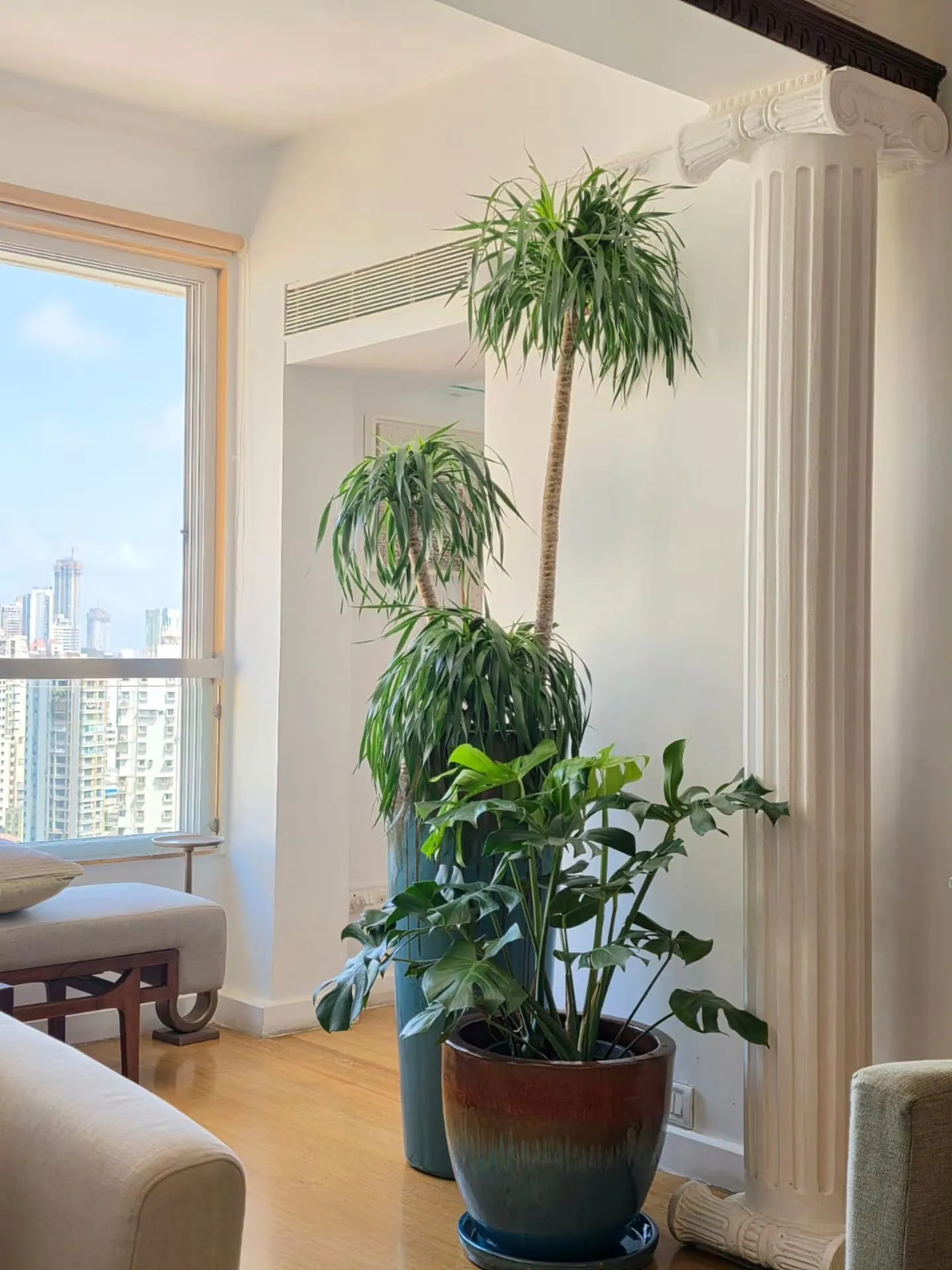
Quick answer
ZZ plant, snake plant, pothos, peace lily, aglaonema, rhapis palm, heartleaf philodendron, dracaena, syngonium and cast iron plant all cope with low to medium light. In Mumbai's humidity the bigger risk is overwatering, so let the top few centimetres of soil dry before watering again.
Many Mumbai apartments have one bright side and several rooms that barely see the sun. The good news is that a number of handsome, easy-care plants are happy away from the window. Here is how to choose them and keep them healthy.
What low light really means
No plant grows in darkness. "Low light" means a room that is bright enough to read in at midday without switching on a lamp, but where the plant sits well away from the window or the window faces a wall or another building.
A quick test: hold your hand about 30 centimetres above where the plant will sit at noon. A soft but visible shadow means low to medium light, which suits every plant below. No shadow at all means the spot is too dark for most plants to stay healthy.
The 10 plants
1. ZZ plant (Zamioculcas zamiifolia)
Glossy, upright and almost indestructible. It stores water in thick underground rhizomes, so it only needs watering every two to three weeks. A sculptural pair of ZZ plants makes a strong entrance, as in this South Mumbai apartment.
2. Snake plant (Sansevieria)
Architectural leaves that cope with low light and missed waterings. Its only real enemy is soggy soil, so use a free-draining mix and water sparingly, especially in the monsoon.
3. Pothos, known in India as money plant
Trailing and fast growing in bright indirect light, and still steady in lower light. Let it spill from a shelf or train it up a moss pole.
4. Peace lily (Spathiphyllum)
Deep green leaves and white blooms. It droops dramatically when thirsty and recovers within hours of watering, which makes it a helpful indicator plant. It flowers less in dim rooms but keeps its foliage.
5. Aglaonema (Chinese evergreen)
Patterned leaves in green, silver and pink. Darker green varieties tolerate lower light better than the pink and red ones, which need a brighter spot to hold their colour.
6. Rhapis palm (lady palm)
Slow growing, elegant and one of the best palms for interiors with limited light. We chose a large rhapis palm for a low-light lift lobby at the Three Sixty West residence.
7. Heartleaf philodendron
Soft, heart-shaped leaves on trailing stems. Similar to pothos in care but with a finer texture that suits bookshelves and side tables.
8. Dracaena
Varieties such as Janet Craig and Lemon Lime handle medium to low light and add height without taking up floor space. Keep them away from cold AC drafts.
9. Syngonium (arrowhead plant)
Arrow-shaped leaves in green, cream or blush pink. It is compact when young and a reliable filler in mixed planters and plant bouquets.
10. Cast iron plant (Aspidistra)
Earns its name. It tolerates deep shade, irregular watering and neglect better than almost anything else, though it grows slowly.
Watering in Mumbai's humidity
Plants in low light use far less water than plants in a sunny window, and Mumbai's humidity slows evaporation even more. That combination is why root rot, not underwatering, is the most common reason indoor plants fail here.
- Check the soil, not the calendar. Push a finger in. If the top few centimetres are dry, water. If not, wait.
- Water thoroughly, then let it drain. Never leave pots standing in a full saucer.
- Water less in the monsoon and in air-conditioned rooms with little light.
- Use pots with drainage holes. Decorative pots without holes should hold a plastic nursery pot inside.
Signs a plant needs more light
- New leaves are smaller than old ones.
- Stems stretch and lean towards the window.
- Variegated leaves turn plain green.
- The plant stops producing new growth for months.
If you see these, move the plant a little closer to the window or rotate it between a brighter and a darker spot every week or two.
Make low light work harder
- Clean the leaves every few weeks. Mumbai dust blocks light.
- Rotate pots a quarter turn when you water so growth stays even.
- Use pale walls and mirrors to bounce light deeper into a room.
- Pair plants with the right planter. A beautiful planter makes a single plant feel like a design decision rather than an afterthought.
Not sure what will work in your rooms? Our indoor plant styling service starts by reading the light in each space.
Questions
Which indoor plant needs the least light?
The ZZ plant, snake plant and cast iron plant tolerate the lowest light levels of common houseplants. They grow slowly in dim rooms but stay healthy if they are not overwatered.
How often should I water indoor plants in Mumbai?
There is no fixed schedule. Water when the top few centimetres of soil are dry. In low light and during the monsoon that can mean every two to three weeks for a ZZ plant or snake plant, and about once a week for pothos or peace lily.
Keep reading
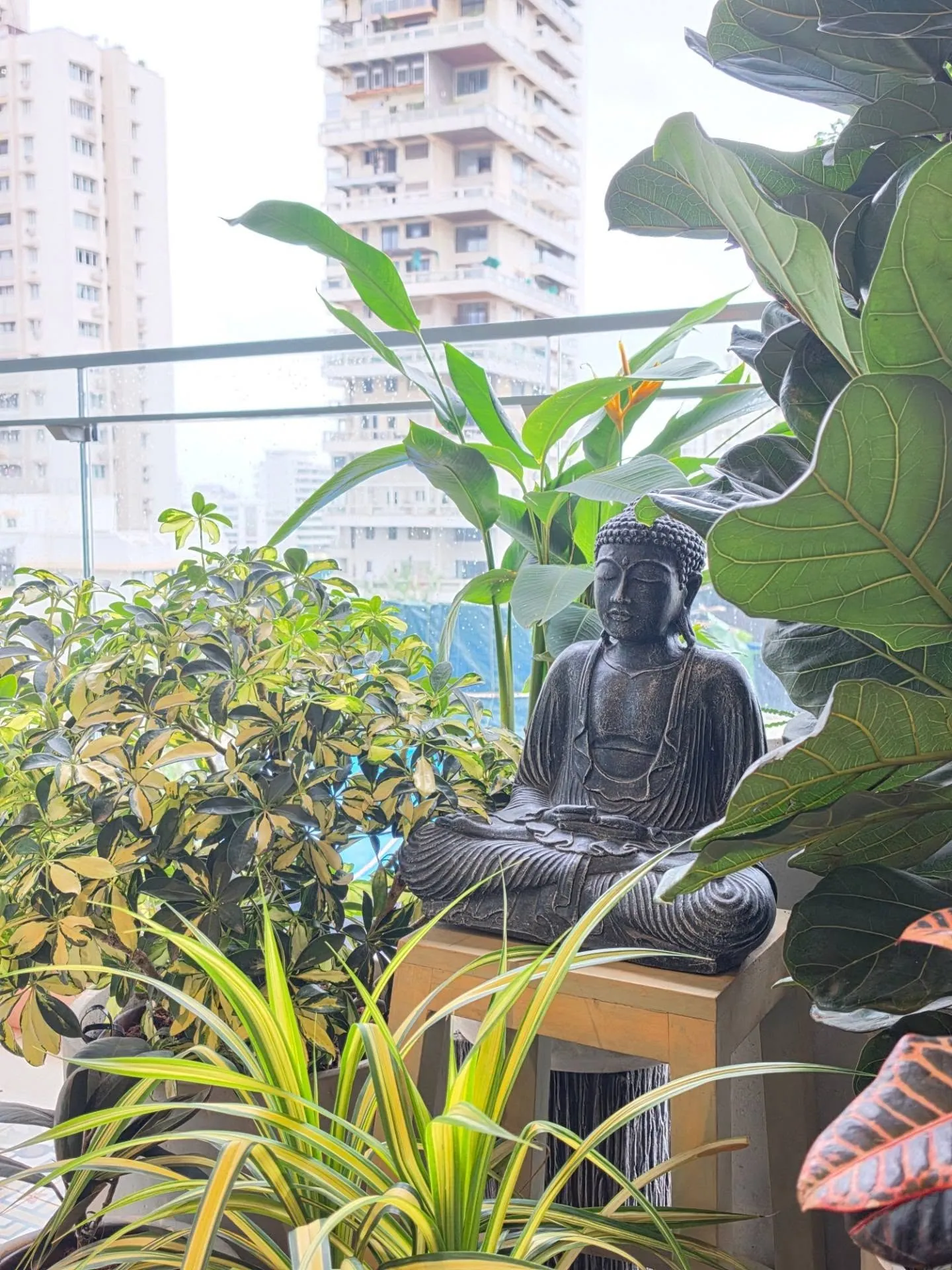
Monsoon plant care for Mumbai homes: a practical checklist
Protect indoor and balcony plants through the Mumbai monsoon: watering, drainage, root rot, fungus gnats, snails, wind and post-monsoon care.
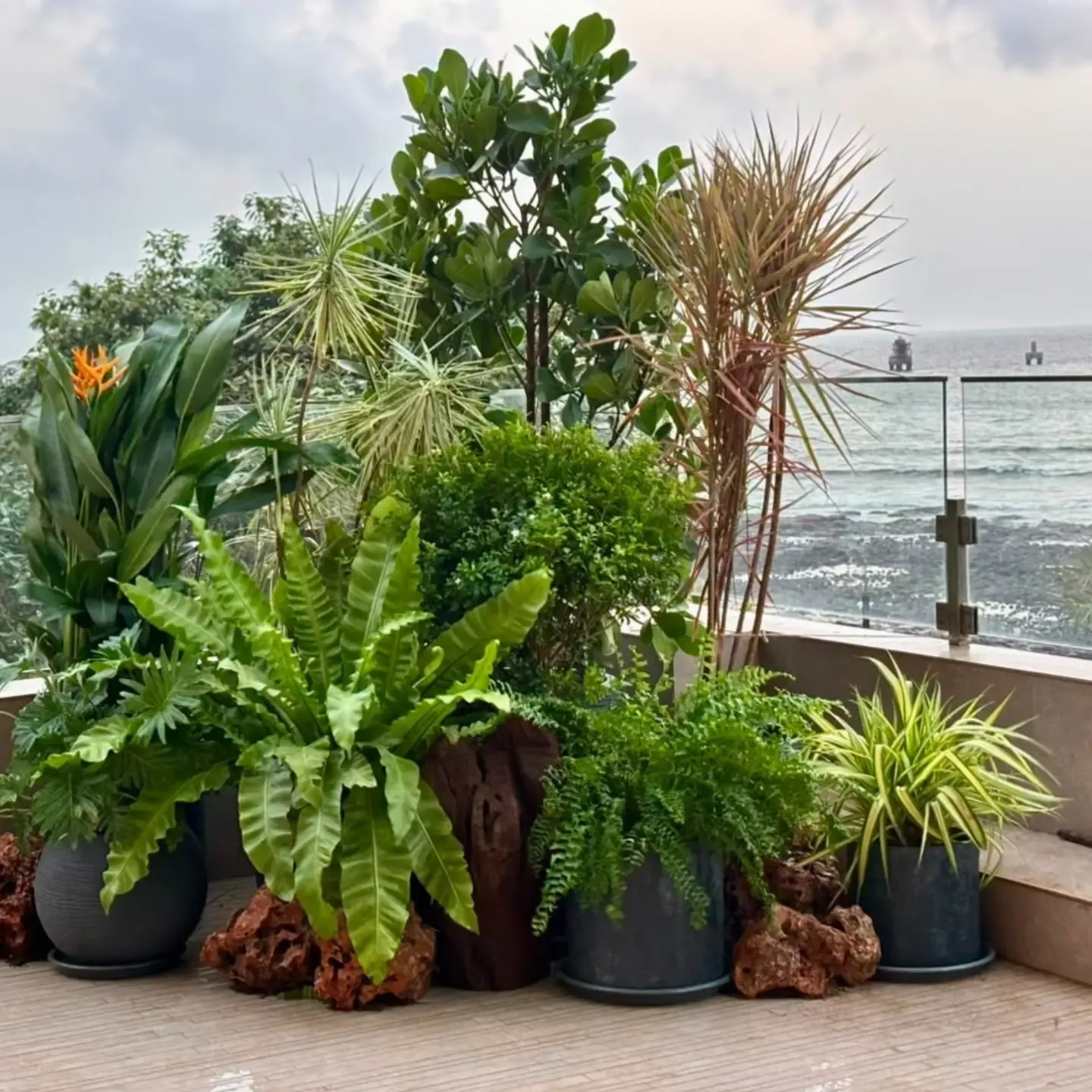
How to design a balcony garden in Mumbai without losing the view
Plan a balcony garden in a Mumbai high-rise: clusters instead of rows, plants for wind and sea air, planters, drainage, privacy and monsoon prep.