
Quick answer
Group plants into two or three intentional clusters instead of lining the railing, keep the tallest plants at the edges so the centre of the view stays open, and choose wind and salt tolerant plants in heavy, free-draining planters. Check weight, drainage and monsoon exposure before you buy a single plant.
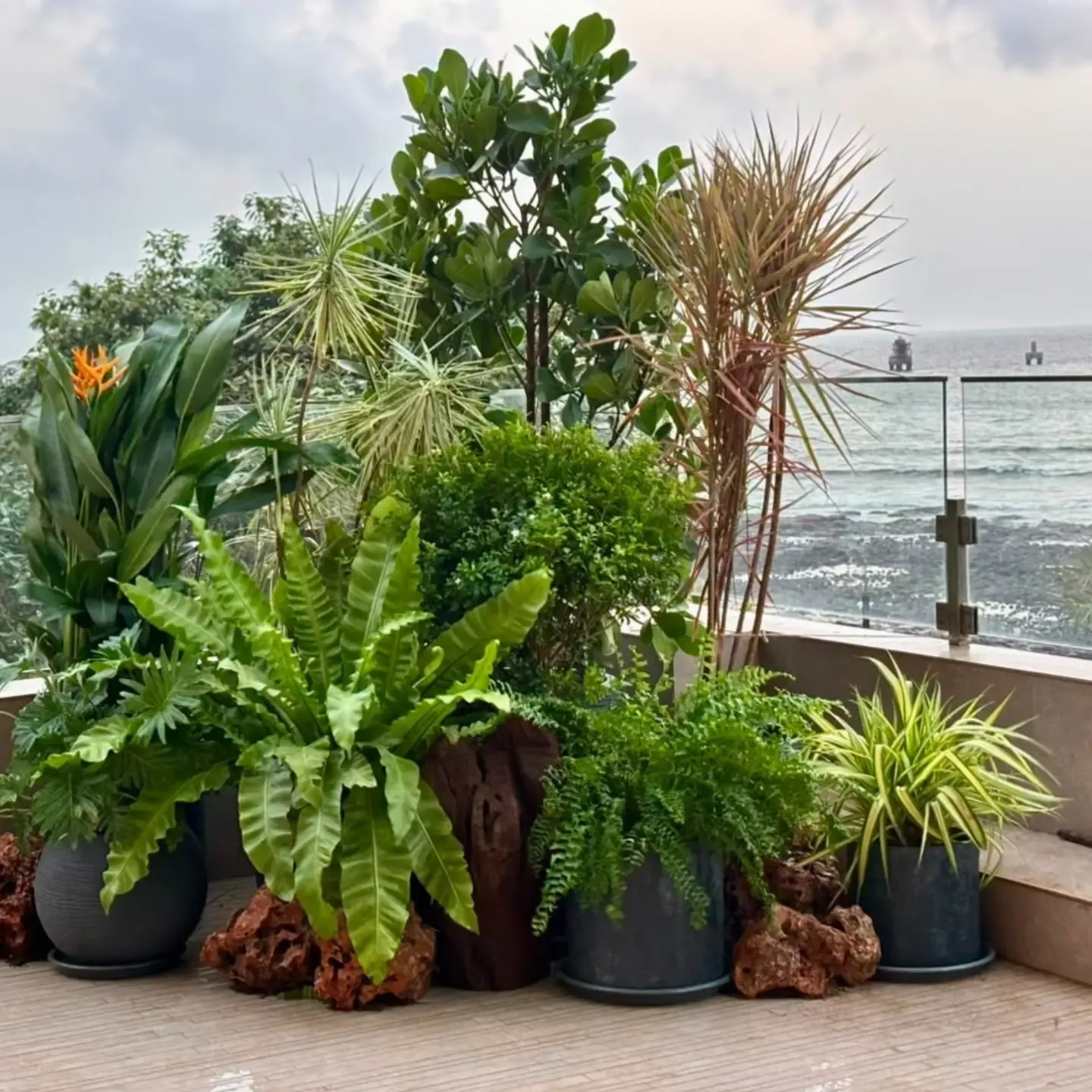
Mumbai balconies are small, windy, humid and often blessed with a view worth protecting. A good balcony garden works with all four. These are the principles we use on projects such as the sea-facing balcony in Bandra-Juhu, where the brief was to add lush greenery without taking anything away from the sea.
Start with the view, not the plants
Before choosing a single plant, stand where you will actually sit and look out. Note three things:
- What you want to keep: the sea, a skyline, a tree canopy, the sunset.
- What you want to hide: a neighbour's window, an AC unit, a building under construction.
- Where the light falls: which corners get direct afternoon sun and which stay shaded most of the day.
The garden should frame the first, soften the second and respect the third. As we put it on the Bandra-Juhu project: when you have a view like this, the plants should not compete with it. They create the frame.
Use clusters, not rows
The most common balcony mistake is a straight line of identical pots along the railing. It blocks the view at seated eye level and looks like a nursery shelf.
Instead, gather plants into two or three clusters. Each cluster can have its own personality:
- A lush corner with layered heights, textures and leaf shapes.
- A sculptural moment built around one branching plant with softer foliage at its base.
- A vertical accent that pairs a tall statement plant with lower and cascading greenery.
Clusters leave open floor and open sightlines between them, so the balcony stays usable and the view stays whole.
Plan heights like a picture frame
Think of the view as a painting and the plants as its frame:
- Tall plants at the sides and corners, where they create privacy without cutting through the middle of the view.
- Low and medium plants in front of the railing, kept below seated eye level.
- Trailing plants at the edges of planters to soften hard lines and add movement.
If you need privacy from a specific window, place one tall plant on that exact sightline rather than raising the whole garden.
Choose plants that can handle a Mumbai balcony
High-rise balconies get strong wind, intense afternoon sun and, near the sea, salt in the air. Pick plants for the conditions, not only for looks.
For sunny, exposed spots
- Plumeria (champa): handles sun, heat and coastal air, and gives height with a sculptural branching form.
- Bougainvillea: thrives in full sun and tolerates salt and wind once established.
- Dracaena marginata: slim, spiky and wind tolerant, good for vertical accents.
For sheltered or semi-shaded corners
- Boston fern and bird's nest fern: love Mumbai's humidity but scorch in harsh wind and direct sun, so keep them in protected corners.
- Heliconia: brings tropical colour; place it where the wind will not shred its large leaves.
- Philodendron and spider plant: dependable fillers that soften the base of a cluster.
For a herb corner
Tulsi, mint and lemongrass do well in terracotta pots in bright light. On one South Mumbai balcony we added a small herb garden in terracotta that the family now uses every day.
Planters, weight and drainage
The planter decides how well the garden survives a Mumbai year.
- Go heavier on windy floors. Wide, weighty planters resist tipping. Tall, narrow pots and hanging planters are the first things the wind takes.
- Check before you load. Large planters full of wet soil are heavy. Check with your building about load limits and waterproofing before installing big pieces.
- Every pot needs a drainage hole. Use saucers or pot feet to protect the floor and keep water moving.
- Lighten the mix. A blend of cocopeat, compost and perlite weighs less than garden soil and drains better.
- Keep the balcony drain clear. Never block it with planters, especially before the monsoon.
The planter is also part of the design. Clean, minimal planters let a patterned floor shine, while a textured urli or an earthen pot can become the hero of a corner.
Privacy without building a wall
When two balconies sit side by side, a living partition works better than a screen. On the Three Sixty West residence, we built a layered cluster of plants with varied heights and tones, then added weatherproof logs and rocks so it reads as a small rock garden rather than a hedge.
Prepare for the monsoon
Before the rains arrive, stake or move tall plants, shift delicate ferns away from driving rain, raise pots off the floor and cut back on watering. Our monsoon plant care checklist covers this in detail.
A quick planning checklist
- Decide what view to keep and what to hide.
- Map sun and shade across the day.
- Plan two or three clusters with tall plants at the sides.
- Choose plants for wind, sun and salt exposure.
- Pick heavy, free-draining planters and check the load.
- Leave floor space to actually sit and enjoy it.
If you would like help planning your balcony, start your project with a few photos of the space.
Questions
Which plants survive on a sea-facing balcony in Mumbai?
Plumeria, bougainvillea and dracaena cope well with sun, wind and salt air on exposed sea-facing balconies. Ferns, heliconia and philodendron do better in sheltered corners away from direct wind.
How can I get privacy on my balcony with plants?
Place one or two tall plants on the exact sightline you want to block, or build a layered living partition of plants with varied heights between two balconies, instead of lining the whole railing.
Keep reading
What is biophilic design? A simple guide for city homes
Biophilic design explained for city homes: where the idea comes from, what plants can and cannot do for air, and five ways to use it in a Mumbai flat.
10 low-light indoor plants that do well in Mumbai apartments
The best plants for low-light Mumbai flats, from ZZ plant and snake plant to pothos and rhapis palm, with watering advice for a humid city.