
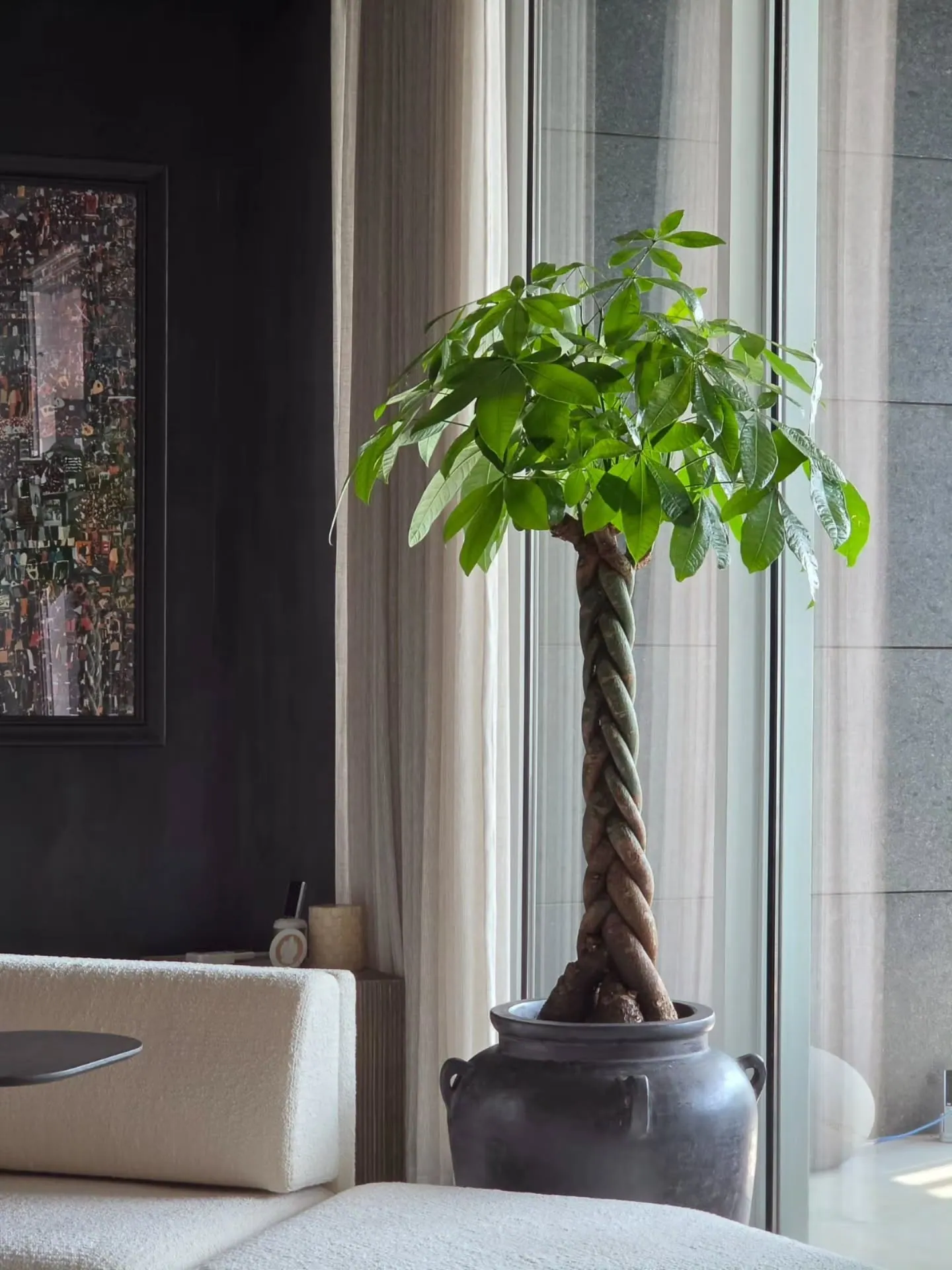
Quick answer
Biophilic design is an approach to architecture and interiors that connects people with nature through plants, natural light, natural materials, views and natural forms. In a city apartment it can be as simple as one well-placed statement plant, a balcony you actually use, and materials like wood, stone and clay.
City life in Mumbai means living high above the ground, behind glass, with very little contact with soil, trees or open sky. Biophilic design is a way of bringing some of that contact back.
Where the idea comes from
Biophilia means a love of living things. The biologist Edward O. Wilson popularised the term in his 1984 book Biophilia, arguing that humans have an innate tendency to seek connections with nature and other forms of life.
Biophilic design applies that idea to buildings. The social ecologist Stephen R. Kellert, who co-edited the 2008 book Biophilic Design, helped turn it into a practical framework for architects and designers. His work groups biophilic design into three broad kinds of experience:
- Direct experience of nature: plants, natural light, fresh air, water and views of greenery or sky.
- Indirect experience of nature: natural materials, colours, textures, patterns and images that echo the natural world.
- Experience of space and place: a sense of open outlook combined with cosy, sheltered corners, the way a clearing at the edge of a forest feels.
What it looks like in a home
You do not need a green wall or an indoor waterfall. In a home, biophilic design usually shows up as:
- Plants placed where you spend time, not only where there is space.
- Furniture arranged to make the most of daylight and views.
- Natural materials such as wood, stone, clay, linen and cane.
- A quiet corner that feels sheltered, such as a reading nook or a balcony seat.
- Layers of green that lead the eye from room to room.
In the Three Sixty West residence, a braided pachira beside the sofa, a dracaena by the bar and a palm in the lift lobby carry the same green story from the balconies into every part of the home.
A note on plants and air quality
You will often read that houseplants purify indoor air, usually citing a NASA study from 1989. The study was real, but it tested plants in small sealed chambers. Later research, including a 2019 review of the evidence, concluded that at the number of plants a normal home can hold, their effect on air quality is small compared with simply ventilating a room.
So open the windows for fresh air, and bring in plants for the reasons that hold up: they make a space feel calmer, softer and more alive, and caring for them is a small daily ritual that connects you to something growing.
Five biophilic ideas for a Mumbai apartment
1. Put a statement plant where the light is
One large, healthy plant near a window has more impact than ten small pots scattered around. A braided pachira, rubber plant or fiddle leaf fig gives a living room a natural focal point.
2. Make the balcony a room
Balconies are often used for storage. Turn yours into a small garden with a seat. On a South Mumbai balcony, a Buddha surrounded by layered foliage became a place to pause every day.
3. Choose natural planters and materials
Terracotta, stone, earthen urns, glazed ceramics and timber connect the room to the earth. Natural rocks and driftwood add texture that plastic never can.
4. Bring green into every room
Small moments matter: a plant on a bookshelf, a fern in the bathroom, herbs in the kitchen. In one Imperial Towers home, basil, mint and aloe vera on the kitchen counter added freshness you can cook with.
5. Create a sheltered corner
A high-backed chair beside a tall plant, or a balcony nook framed by greenery, gives the feeling of refuge that people naturally seek, while still looking out to the view.
Start small
Biophilic design does not have to start with a renovation. Start with one corner you use every day and make it greener, softer and more natural. If you would like help, our indoor plant styling and balcony garden services are built around exactly this idea.
Questions
Is biophilic design expensive?
It does not have to be. Biophilic design can start with a single statement plant near a window, a balcony seat surrounded by greenery, or natural materials such as terracotta and wood. Larger installations cost more, but the principles work at any budget.
Do indoor plants really purify the air?
Only slightly. Research since the 1989 NASA study suggests that at normal household numbers, plants have a small effect on indoor air compared with ventilation. Their main benefits are how they make a space look and feel.
Keep reading
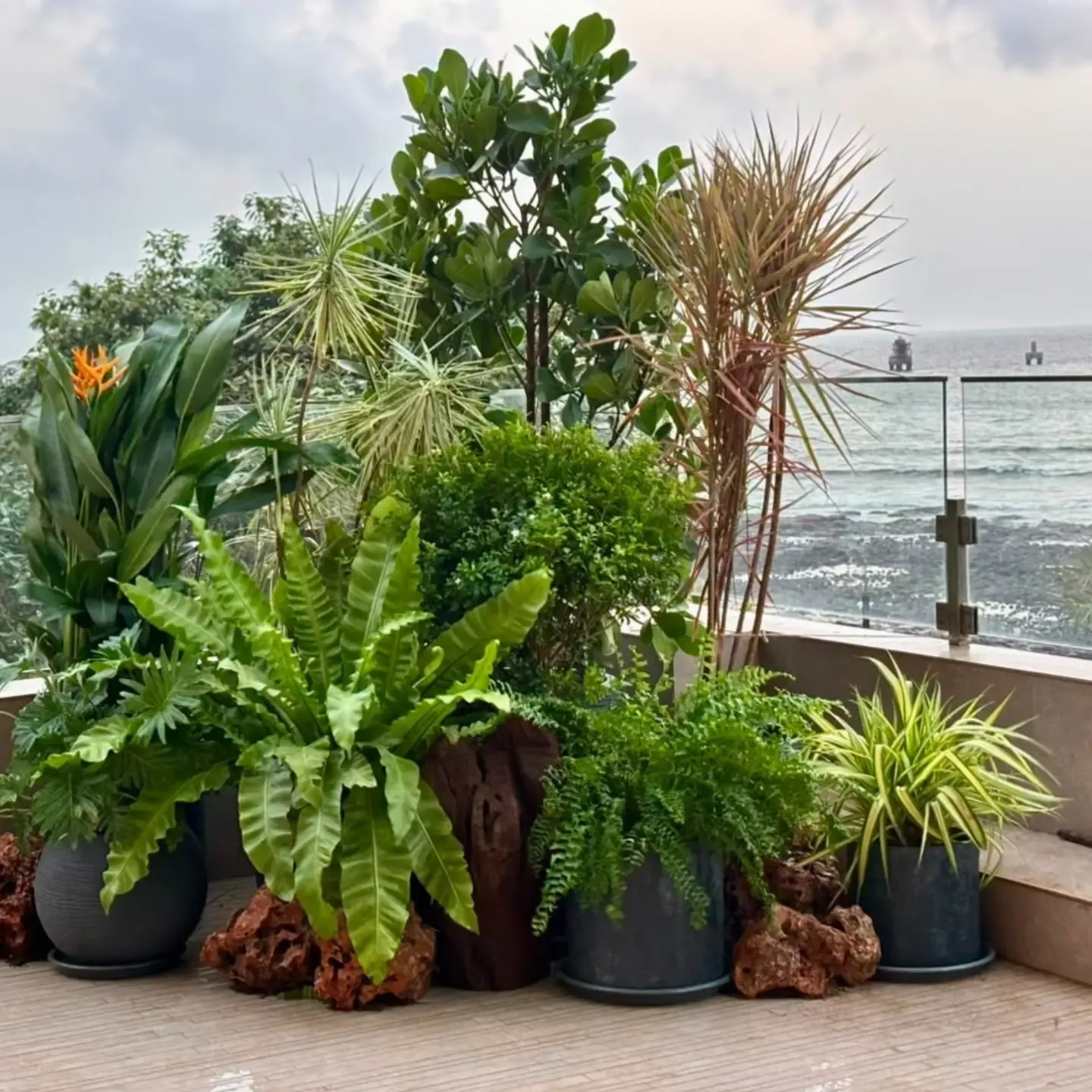
How to design a balcony garden in Mumbai without losing the view
Plan a balcony garden in a Mumbai high-rise: clusters instead of rows, plants for wind and sea air, planters, drainage, privacy and monsoon prep.
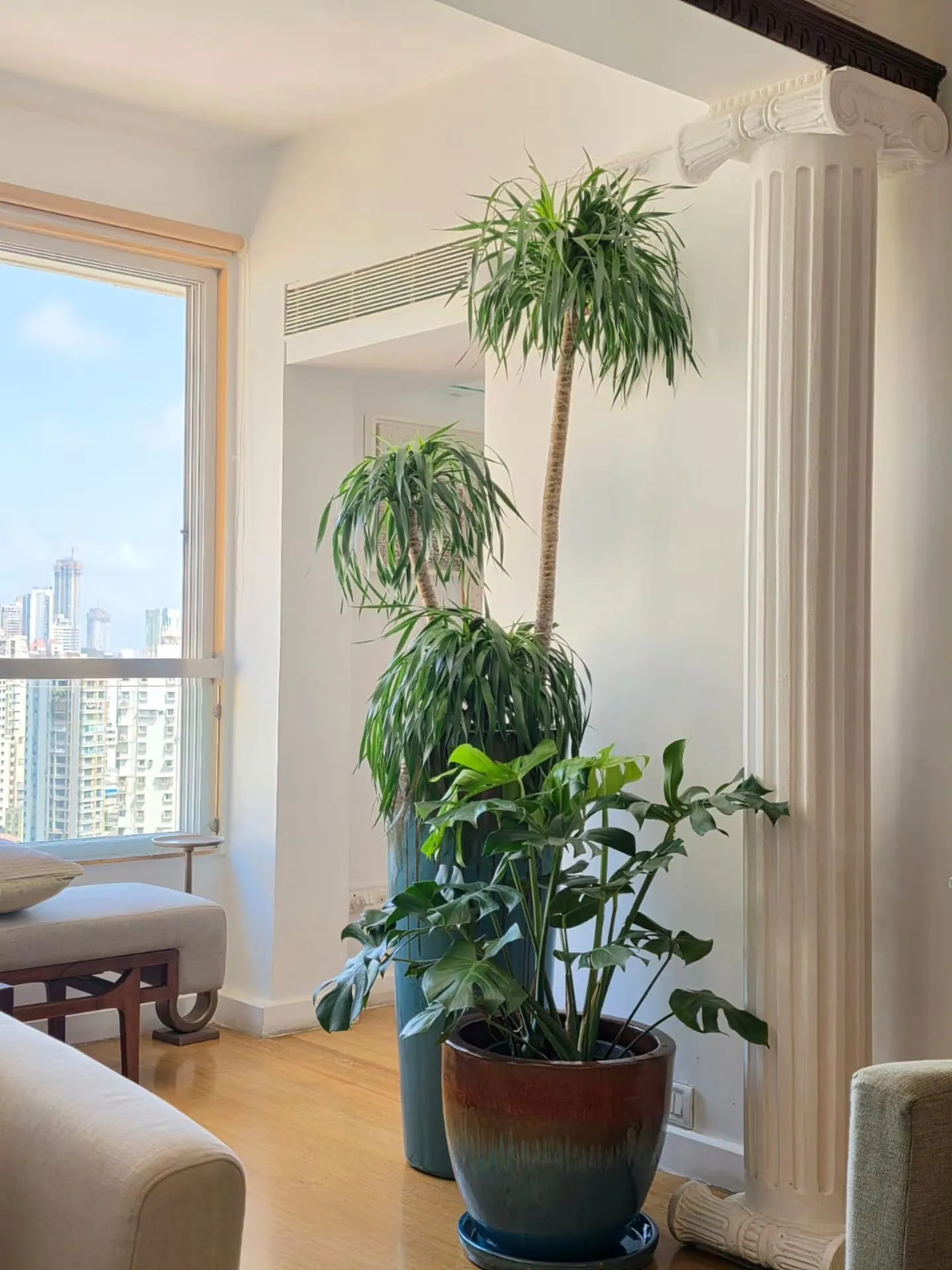
10 low-light indoor plants that do well in Mumbai apartments
The best plants for low-light Mumbai flats, from ZZ plant and snake plant to pothos and rhapis palm, with watering advice for a humid city.