
Quick answer
Good plant styling is about balance, not quantity. Give each arrangement one focal plant for height, add soft fillers for texture, a contrasting leaf for depth and something that trails over the edge for movement. Then choose a planter that complements the floor and walls instead of competing with them.
Most people style plants by adding more of them. The result is usually a crowded corner where nothing stands out. Professional plant styling works the other way: fewer, better-chosen plants, each with a clear role.
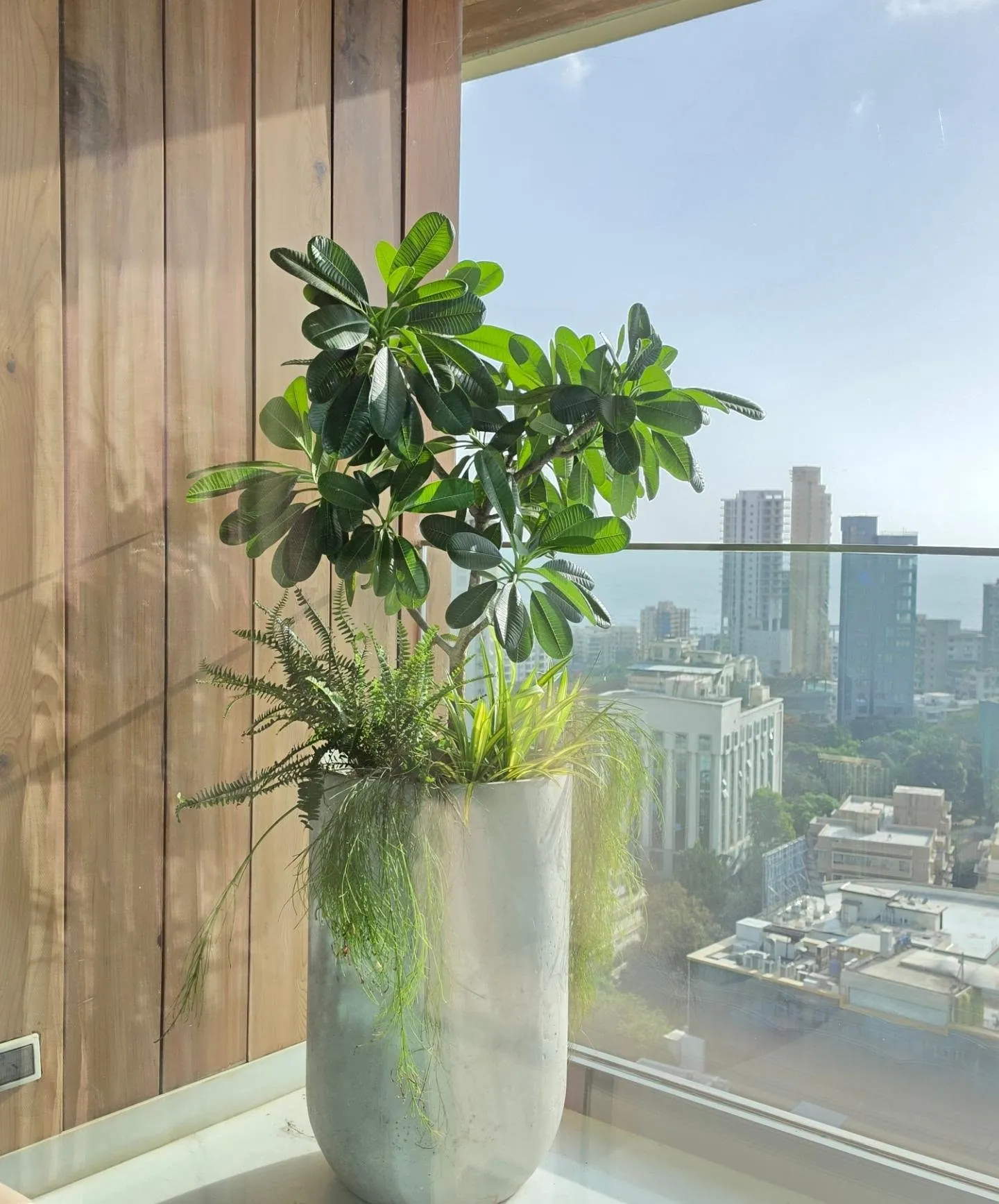
Here is how we approached one of our most popular arrangements, a single tall planter that transformed a corner of a high-rise apartment.
More plants is not the goal
The most beautiful planters are not created by filling every inch with plants. They come from balancing height with softness, bold foliage with delicate textures, and light greens with deeper tones. Before you buy anything, ask what each plant will do in the arrangement.
Height: start with a focal point
Every arrangement needs one plant that the eye goes to first. It sets the height and the character of the whole piece.
In our planter, a plumeria provides height and structure, with glossy green leaves and a branching form. For larger spaces, statement plants such as a braided pachira, a rubber plant or a fiddle leaf fig do the same job. Place the focal plant slightly off-centre or towards the back so the rest of the arrangement can build around it.
Texture: mix leaf shapes and sizes
Once the focal point is in place, contrast it.
- Feathery textures such as Boston fern soften bold leaves and instantly make a planter feel lush.
- Strappy leaves such as spider plant add fine lines and movement.
- Broad, glossy leaves such as aglaonema or peace lily give weight at the base.
Aim for at least three distinct leaf shapes in one planter. If everything has the same leaf size, the arrangement reads as a single green blob from across the room.
Tone: use the full range of greens
Green is not one colour. Combine:
- Deep greens for depth and calm.
- Fresh lime and chartreuse to bring light into a darker corner.
- Variegated leaves, such as the white-striped spider plant, for contrast.
- A single warm accent, such as a croton, a red-edged aglaonema or an orange heliconia bloom, used sparingly.
Movement: let something spill
A plant that trails over the rim breaks the hard edge of the planter and connects the arrangement to the floor. In our planter, a cascading casuarina spills over the side and gives the piece a relaxed, natural feel. Pothos, Monstera adansonii and string-of-pearls do the same in smaller pots.
Container gardeners often call this formula "thriller, filler, spiller": one plant that thrills with height, a few that fill the middle and one that spills over the edge.
The planter is part of the design
A planter can complement a room or fight it.
- On a busy surface, such as an intricate inlay floor, choose clean, minimal planters so the floor stays the hero.
- In a minimal room, a textured or earthen planter, such as an urli or a hand-glazed ceramic, can become the focal point.
- Match scale. A tall plant in a small pot looks top-heavy; a small plant in a huge pot looks lost.
On one South Mumbai balcony, clean planters let the patterned floor shine. In a South Mumbai apartment, the client's own ceramic planters set the tone, and we chose plants to suit them.
Clusters for larger spaces
For a balcony or a large room, group planters into clusters instead of spacing them evenly:
- Use odd numbers, such as three or five pots, which look more natural than pairs.
- Vary the heights so the cluster steps down from a tall back plant to low front plants.
- Repeat one plant or one planter finish to tie the group together.
- Add natural materials such as stones, rocks or a piece of driftwood to ground the composition.
A quick styling checklist
- Pick one focal plant for height.
- Add two or three contrasting textures.
- Mix deep, fresh and variegated greens.
- Let one plant trail over the edge.
- Choose a planter that suits the floor and the scale.
- Step back and remove anything that does not have a clear role.
And remember the lesson the planter teaches: when everything finds its place, the whole thing flourishes. If you would like us to style a corner of your home, start your project.
Questions
How many plants should go in one planter?
Usually three to five: one focal plant for height, one or two fillers for texture and one trailing plant for the edge. The right number depends on the planter size, but every plant should have a clear role.
How do I choose the right planter for an indoor plant?
Choose a planter with a drainage hole or a nursery pot inside, sized slightly larger than the root ball. Match its style to the room: minimal planters for busy floors and patterns, textured planters for minimal rooms.
Keep reading
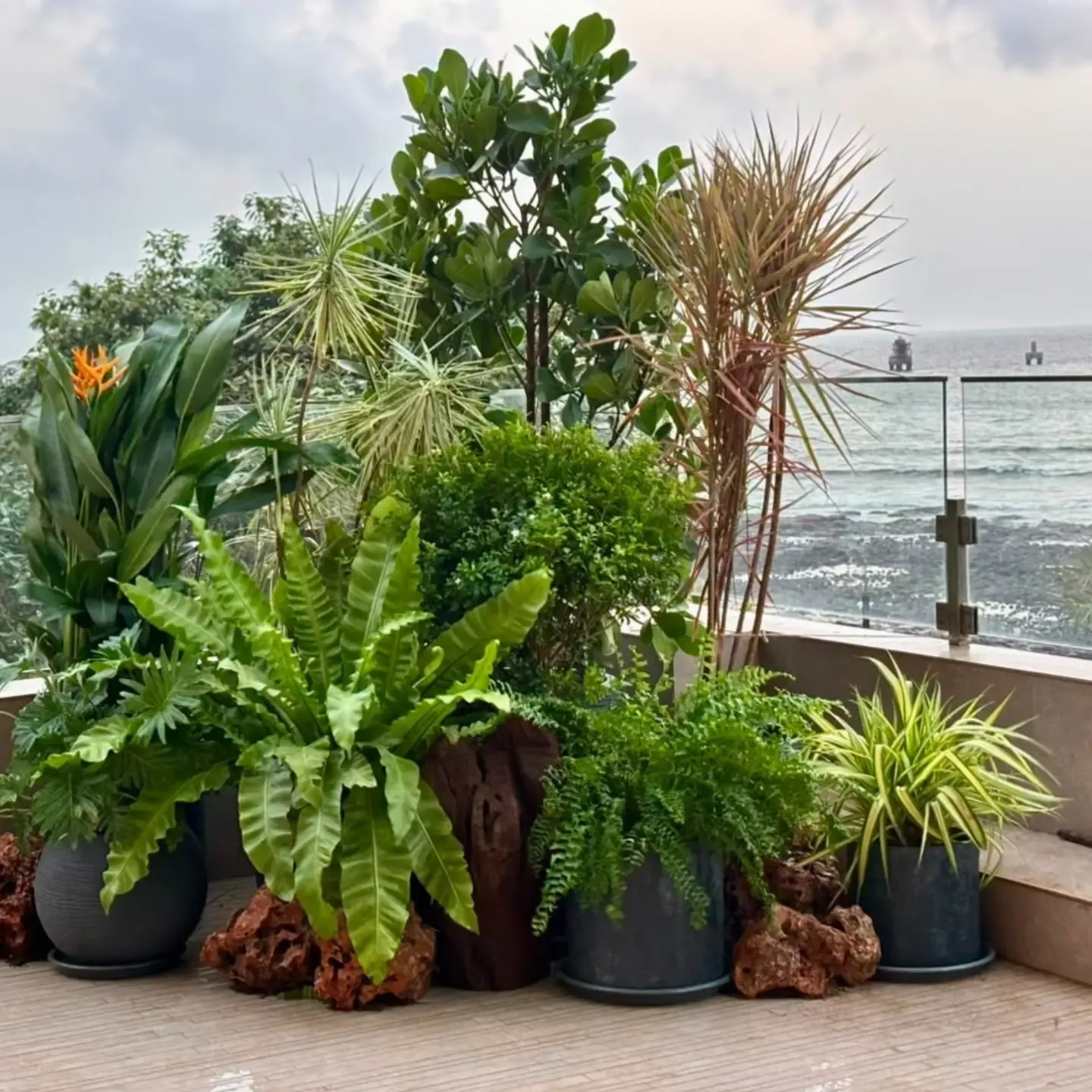
How to design a balcony garden in Mumbai without losing the view
Plan a balcony garden in a Mumbai high-rise: clusters instead of rows, plants for wind and sea air, planters, drainage, privacy and monsoon prep.
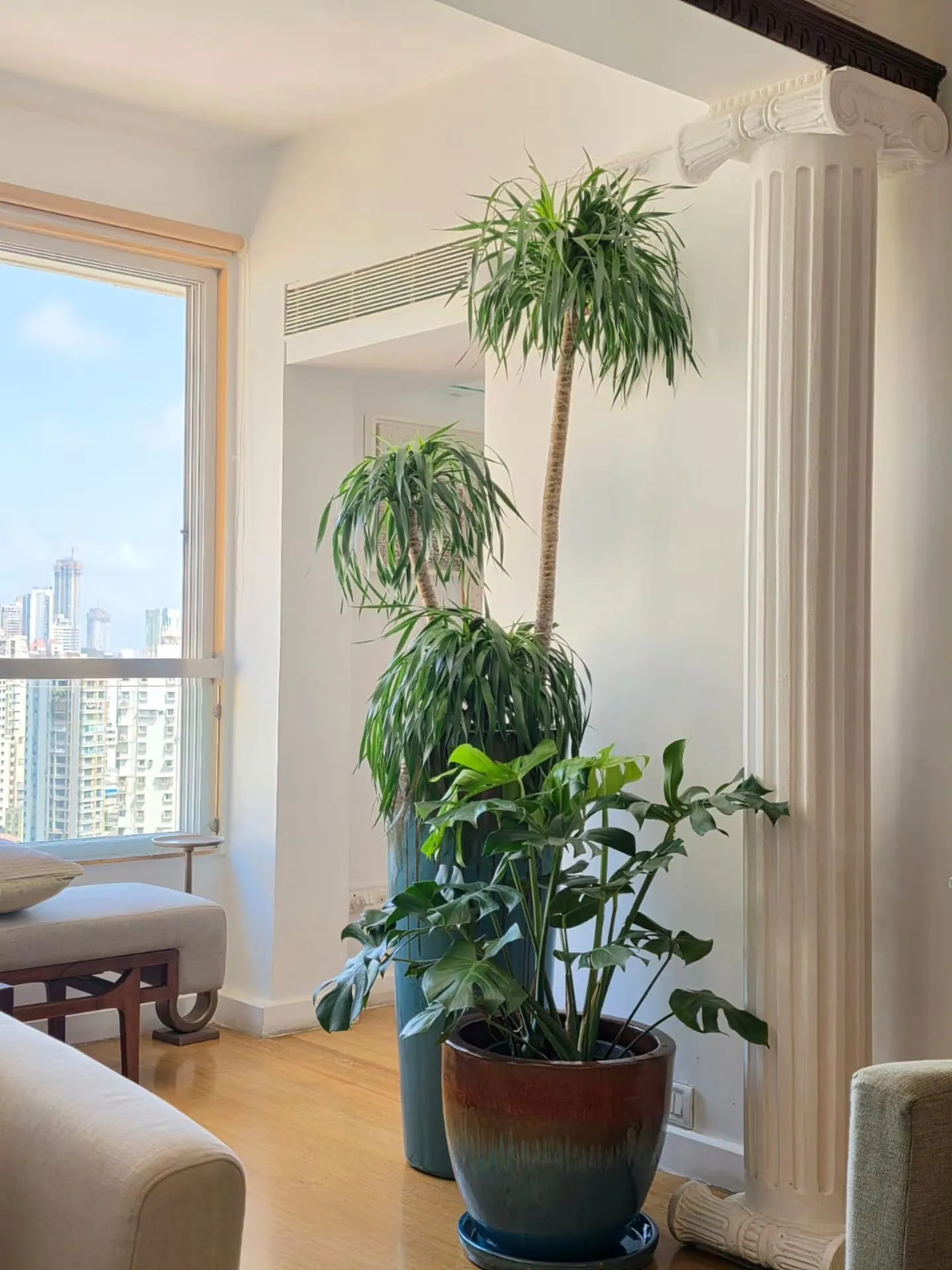
10 low-light indoor plants that do well in Mumbai apartments
The best plants for low-light Mumbai flats, from ZZ plant and snake plant to pothos and rhapis palm, with watering advice for a humid city.